
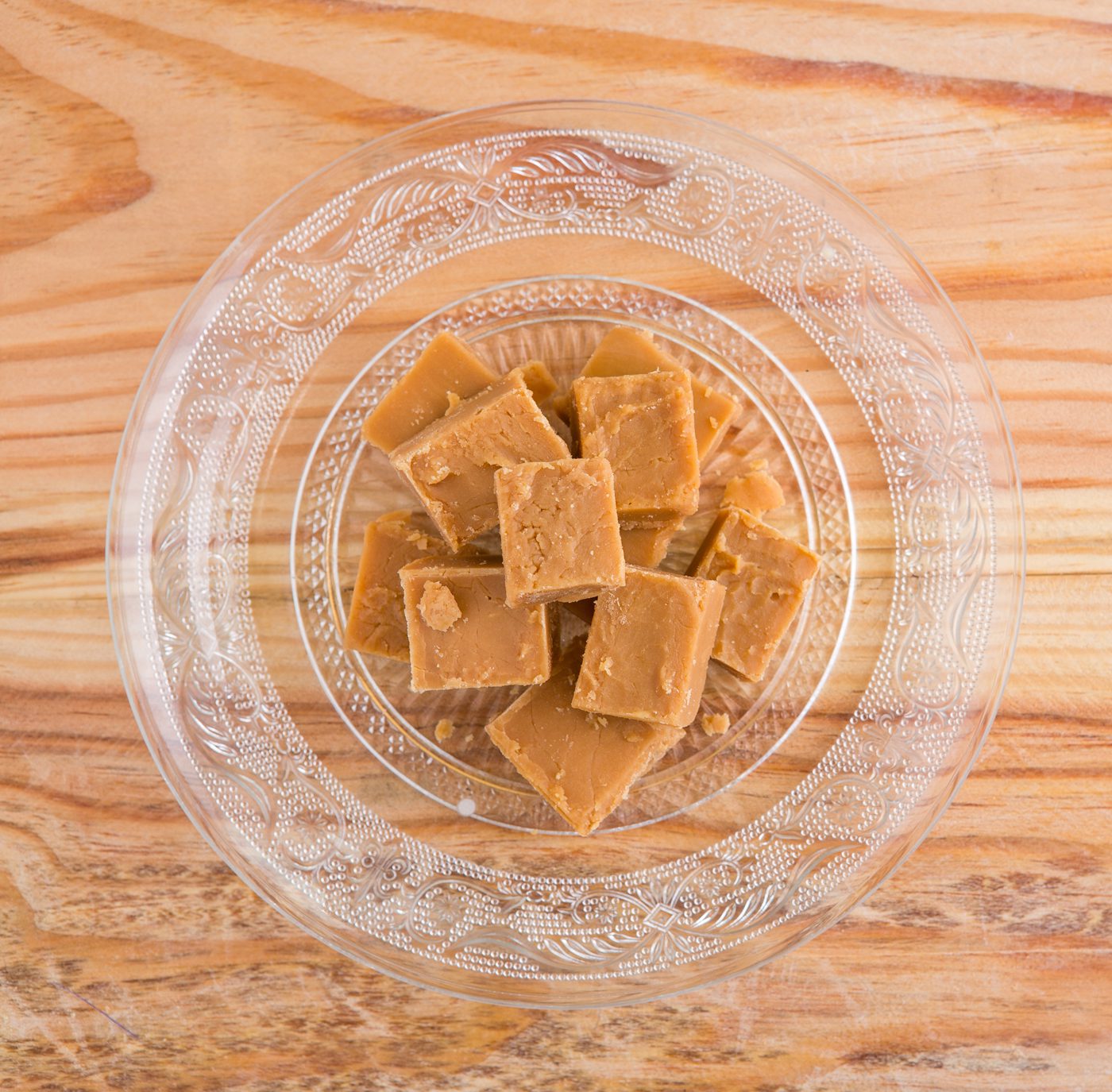
It has been made by Scots for three centuries, most granny’s had a fail-safe recipe and one time an American tourist mistook it for a grainy bar of soap. Yes tablet, the buff coloured cubes of pure sweetness that take most of us back to our childhood remains a firm favourite in Scotland. But what is its history, and why do us Scots have such a love affair with this, the sweetest of all sweet treats?
It is an often quoted piece of food folklore that “tablet” got its name from medieval doctors prescribing sugar for energy, and there is some truth to this.
According to food historian and regular Scran podcast guest, Peter Gilchrist, the first note of sugar in Britain was in 1099. It would have taken centuries for this rare and expensive commodity to make it to Scotland’s upper echelons.
From the 1500s, this price would begin to drop as enslavers colonised the Americas and established plantations. By the 1700s, Scotland was a primary cog in the Trans-Atlantic slave trade, benefitting directly from the transportation of slaves which opened up access to the trade of cheap sugar.
Back in Scotland, doctors became early adopters of sugar, using it to mask bitter medicine in tablets and to “balance the body’s humours.” Patients receiving a small luxurious sugar rush would certainly have felt invigorated, so it’s perhaps not surprising that sugared “tablet” became a staple amongst Scotland’s elite. As sugar houses in Leith, Glasgow and Greenock were established, sugar became more widely available, just as Scotland’s first published recipe book went to print.
It was around this time that access to sweets and confectionery grew, as did the Scots’ sweet tooth. Mr Gilchrist explained that Scotland has had a love affair with sugar for three centuries. He said: “The sugar houses in port towns that processed the raw canes from around the world gave Scots more access to sugar than most other communities.
“I would suggest that "sweets" are a large part of our national palette and you don't get much sweeter than tablet.
“I also think the fact that tablet has been a part of "home baking" for nearly two centuries, has added emotional value to tablet; when we eat it today, we compare it to the tablet we ate in our childhood.”
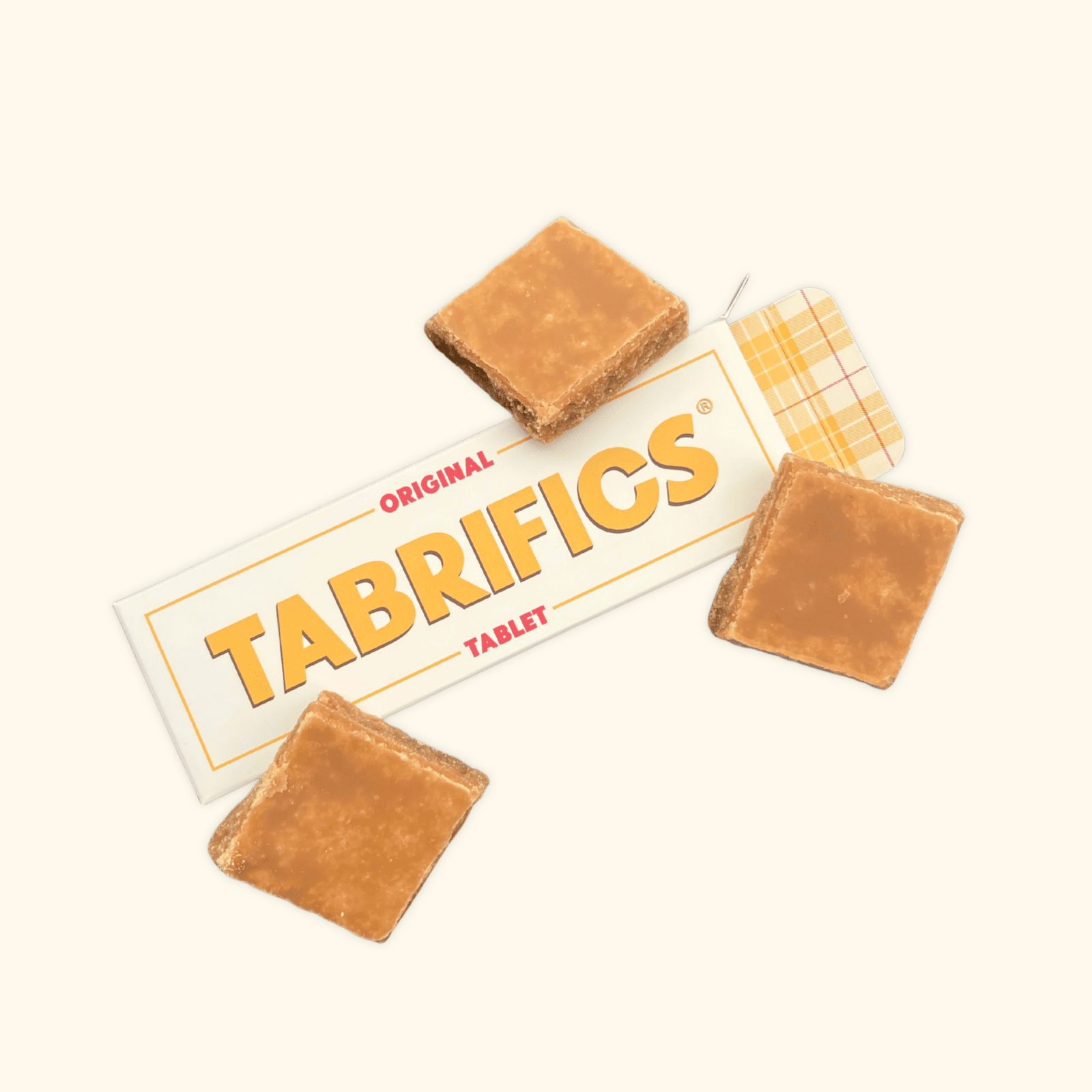
Tablet is still very much for sale, with Aberdeen-based company Tabrifics launching this year. Founder Johnathan Laing explained why he was driven to set up a tablet company. He said: “Tabrifics began with a simple but powerful thought, sparked in Edinburgh during my final semester at University: what if Scotland’s most iconic sweet, (our sweetie!), could be more than just a local treasure?
“I grew up with tablet thanks to my Dad, who would always make it and have me by his side, licking the spoon and the tin of condensed milk once he had finished. It was always there in our family. He'd make it for family gatherings, holidays, and special moments, like birthdays, and sometimes just because.
“So, when I looked around at the offering today, I realised that while chocolate brands like Toblerone and Lindt had conquered the world, Scottish Tablet had remained in the shadows, quietly loved but never celebrated properly globally. Not good and it saddened me! So, I set out to change that.
“Tabrifics isn’t just another confectionery brand. It’s truly a history making treat. Every box we make is a handcrafted piece of Scotland, wrapped in modern design, ready to sweeten life’s special moments anywhere in the world. That’s what makes us unique: we’re not just selling a sweet, we’re "transforming tradition" for our beloved sweet treat, forever.”
It’s this harking back to our childhood that Mr Gilchrist thinks is putting tablet making at risk and firmly in the camp of ‘things for tourists’. He said: “Scots absolutely still eat it, but I do think that the next generation have less of those emotional connections to it.
“Generally, fewer people are baking and working with a big pot of sugar can feel scary. If your mum or gran didn't make it growing up, you might not be tempted to make it yourself.
“Again, we're at a crossroads of another classic Scottish dish and we need people to break out their "Jeely pans" again and reignite our love of making tablet.”

This nostalgic connection is something Mr Laing is hoping to get across with this tablet, saying: “I remember the smell of condensed milk, sugar and butter bubbling on the stove. Tablet isn’t just a sweet to me, it’s a memory, a story, a piece of my home.
“That connection is what fuels the Tabrifics brand. When you taste our tablet, I want you to feel that same sweet warmth of home, whether you grew up in Scotland or are discovering it for the very first time.”
Tablet recipes date back to the 1800s, with Mrs McLintock’s Receipts for Cookery and Pastry-Work (which was printed in 1736 in Glasgow), including four recipes for tablet; Rose, Cinnamon, Orange and Ginger.
It started to become widely made when condensed milk was easy to buy, as Mr Gilchrist explained: “Towards the end of the 1800s, condensed milk factories would open in England and the new grocery chains popping up in Scottish towns and villages would give the country access to this new pantry staple, providing tablet with its trademark richness.
“The Victorian’s love of confectionery and romantic Scottish branding would cement tablet as the sweet of Scotland, as it was exported across the empire to immigrating Scots.”
While it’s known for its crumbly texture, Mr Laing’s version is “smoother and creamier”. He said: “Scottish Tablet has a reputation for being overly sweet, sometimes too grainy, almost brittle, and very very "twee" and "old-fashioned". I wanted to break that mould.
“Our recipe is smoother, creamier, and more refined while still delivering that classic tablet “snap.” It melts on your tongue like velvet and keeps its rich character. We spent so much time perfecting what we do at scale to my father's recipe. Months and months of work. Failure after failure. And investment into bespoke special equipment which ensures our tablet is like no other.
“But we're finally there now and it's amazing. We’ve also elevated tablet visually and culturally through our brand. It’s not just something you buy at a village fair now, it’s something you’re proud to gift, to bring out at Christmas dinner, to enjoy with whisky, at work or during your favourite movie with friends or your date. Proper Scottish Tablet. Irresistible. Yours.”
With plans to expand their flavour range, exploring whisky and gin pairings and looking at collaborations, Mr Laing has high hopes for this, the modern face of a very old sweet treat.